

Valuations
A valuation records what a plan was worth on a given date. The latest one sets the plan's value, and the history builds the 12-month trend you see on the plan, the Plans page and dashboards.
See a plan's valuations
Open the plan and click the Valuations tab. Each row shows the date, the type of valuation and the value, newest first. Search by date or type.
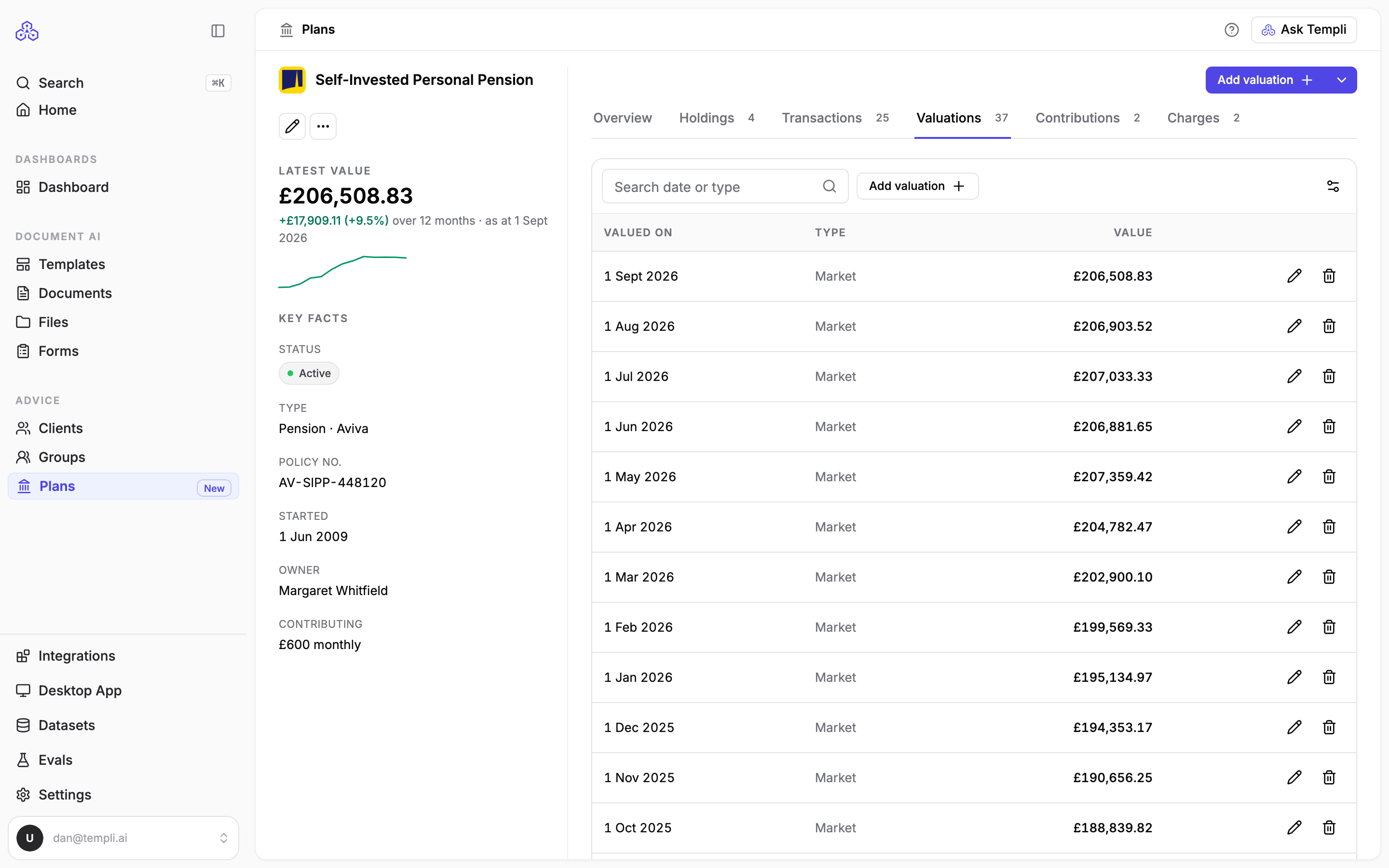
Which valuation sets the plan's value
The plan's value is its newest Market, Fund, Estimated or Other valuation. A Surrender or Transfer value is what the plan would pay out if it were cashed in or moved, so Templi only uses one of those when the plan has no other valuation.
When a provider quotes a transfer value lower than the fund value, record both. The plan keeps showing the market value, and the transfer value stays on file for the transfer advice.
Ask Templi to record a valuation
Ask in chat, for example Record a market valuation of £206,508.83 on Margaret's SIPP as at 1 September 2026, or attach the provider statement and ask Add the valuation from this statement.
Add a valuation yourself
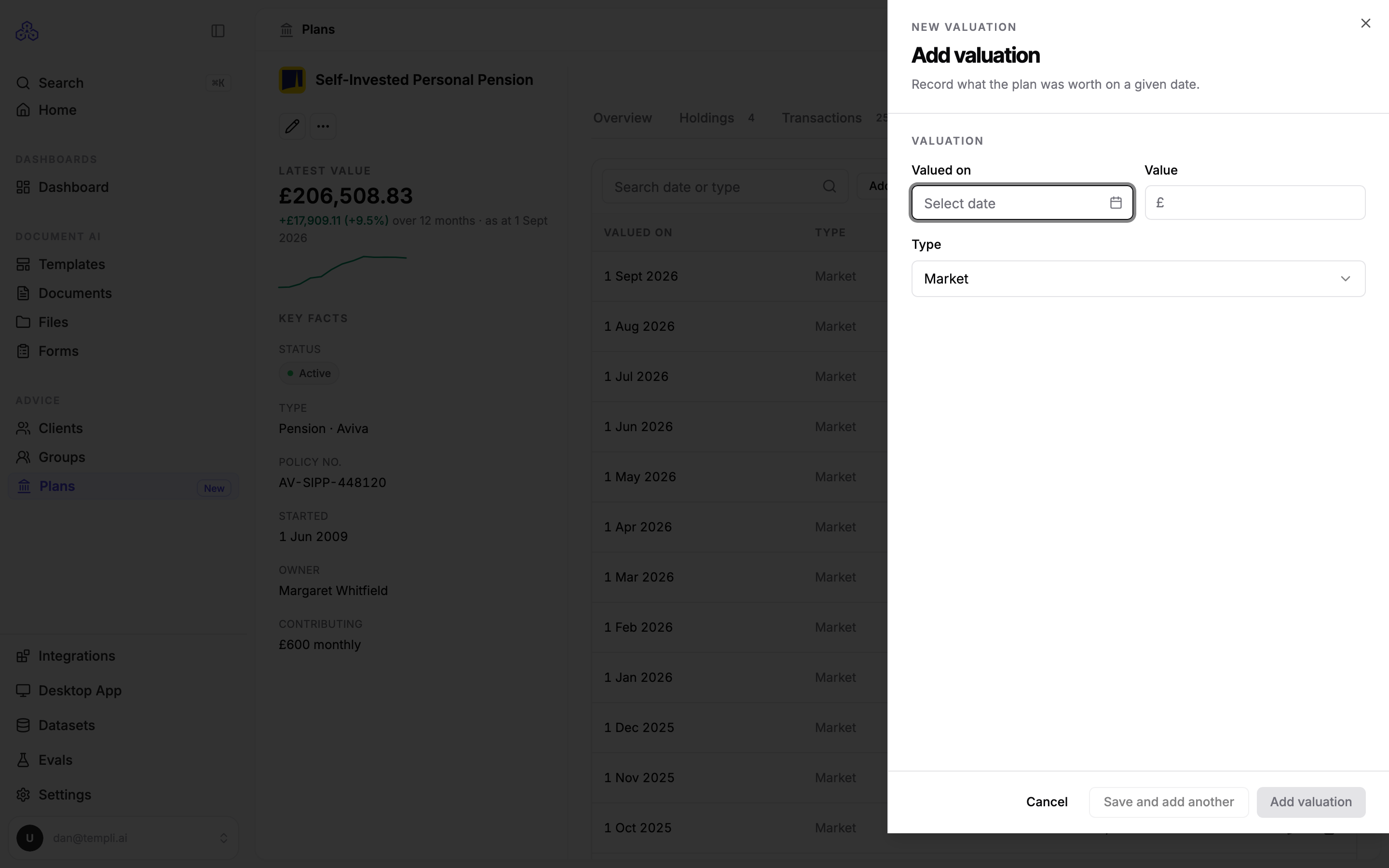
On the Valuations tab, click Add valuation.
Set Valued on to the date on the statement.
Enter the Value.
Choose the Type. Market is the usual choice.
Click Add valuation.
To correct or remove a valuation, use the buttons on its row. Removing the newest valuation sets the plan's value back to the one before it.
Keep valuations up to date
A plan counts as needing a valuation when it has none from the last six months. The Needs valuation figure on the Plans page shows how many, and each one's Last valued date turns amber. Importing from your back-office system again brings in the latest valuations it holds.