

Templi could not open the file as a Word document. Check that it opens in Word, that it is a .docx under 10 MB, and that it is not password protected, then import it again. Click the status to see what Templi reported.
Import your templates
Bring the Word templates you already use into Templi by dropping them on the Templates page or attaching them in Ask Templi. Templi imports several files at once and tags the parts that change for each client in the background, so you can carry on working while it runs. If you are new to templates in Templi, start with How templates work.
Before you start
Templates must be Word files (.docx), up to 10 MB each. If a template is an older .doc file, open it in Word and save it as .docx first.
Gather the templates your advisers use most, such as your suitability reports, annual review letters and protection recommendations. You can import them all in one go.
Note how your firm marks up its templates, for example highlighted text for client details or red text for optional sections. Telling Templi gets the tagging right first time.
Import from the Templates page
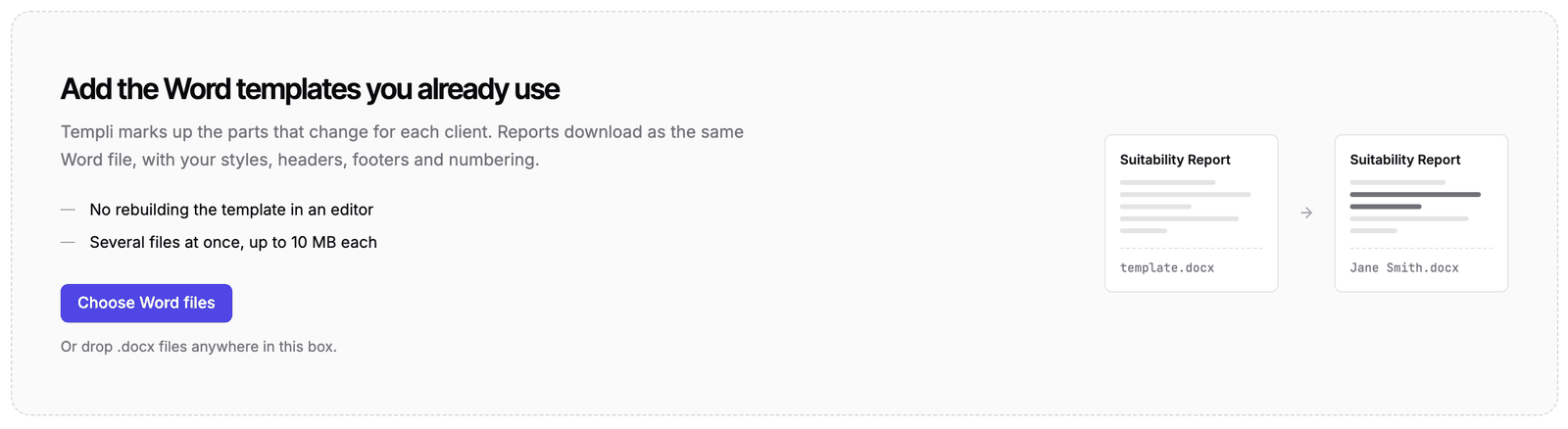
Open Templates. If your library is empty, click Choose Word files. Otherwise drop your files on the Drop Word templates here box, or click choose files.
Check the list of files. Click Add more to add another, or the cross beside a file to remove it.
Optionally, describe how your templates are marked up under How are your templates marked up?. For example: "Highlighted text is filled in for each client, and sections in red are removed when they do not apply."
Click Import. Each file becomes a draft template straight away.
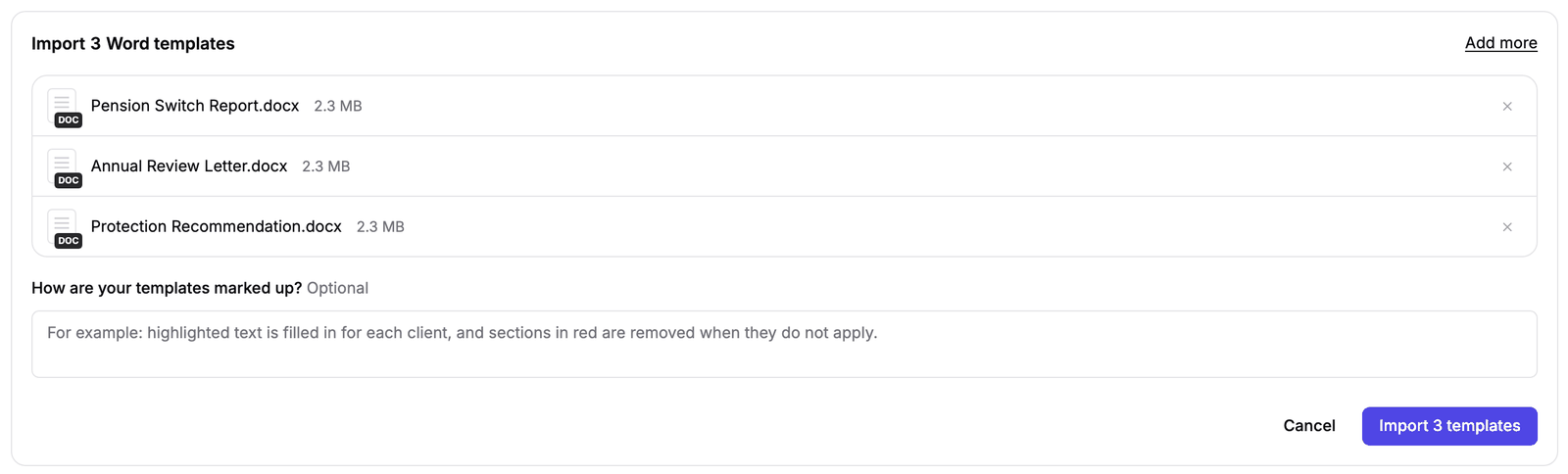
The mark-up note is the best way to get the tagging right first time. Templi follows your description over its own reading of a colour or highlight.
Import automatically from Ask Templi
Use Ask Templi when your templates are already attached to a chat, or when you want to import many at once without opening the Templates page.
Open Ask Templi and attach one or more Word files.
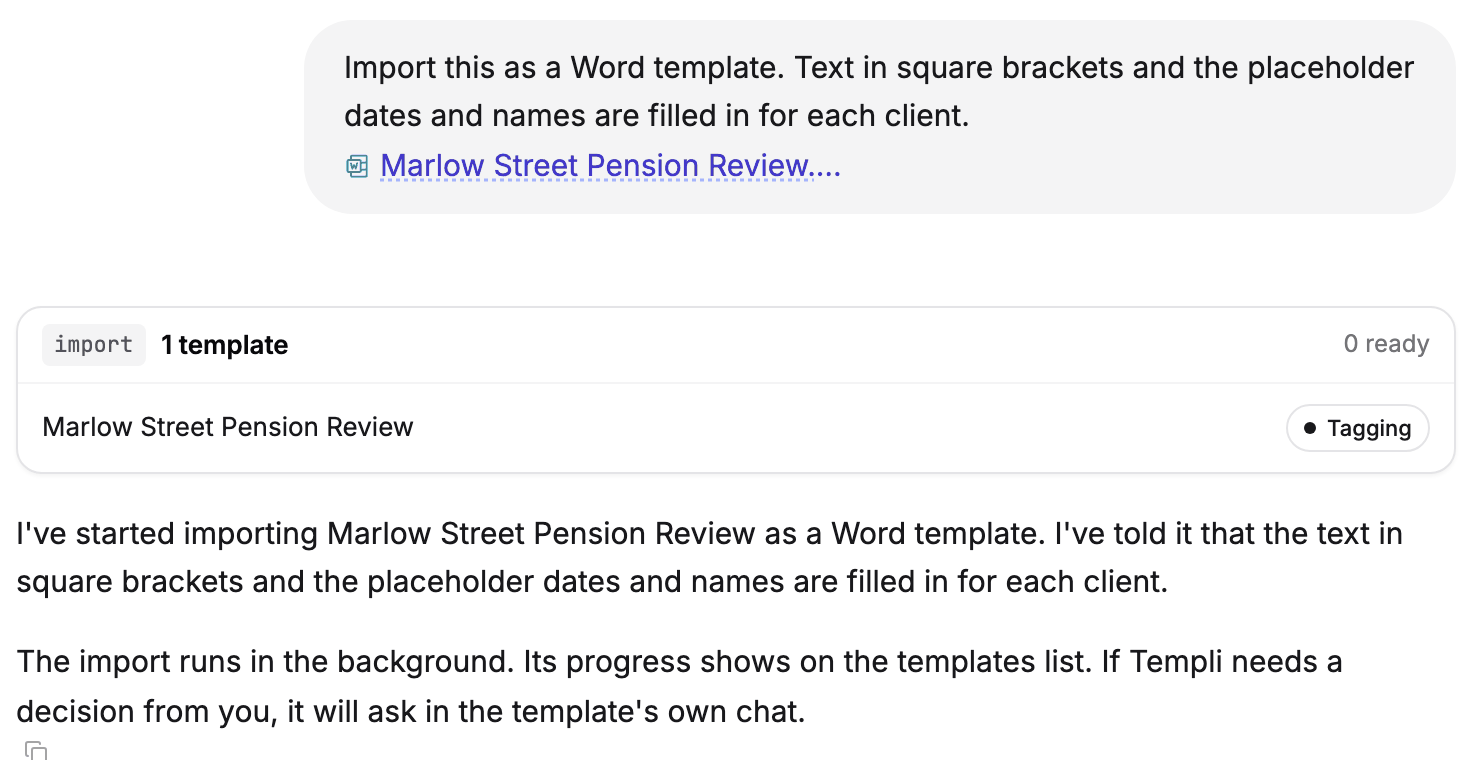
Ask Templi to import them, and say how they are marked up. For example: "Import these as Word templates. Text in square brackets and the placeholder dates and names are filled in for each client."
Templi starts the import and shows a progress card in the chat with a line for each template. Ask "How is the import going?" at any time for an update with the number of blocks tagged in each template.
What Templi does with each file
Templi reads the guidance your firm left in the file, such as highlighting, coloured text, placeholders like [Client name], notes to advisers and Word comments. It tags those parts as AI blocks, removes the guidance so it never reaches a client, then checks the result.
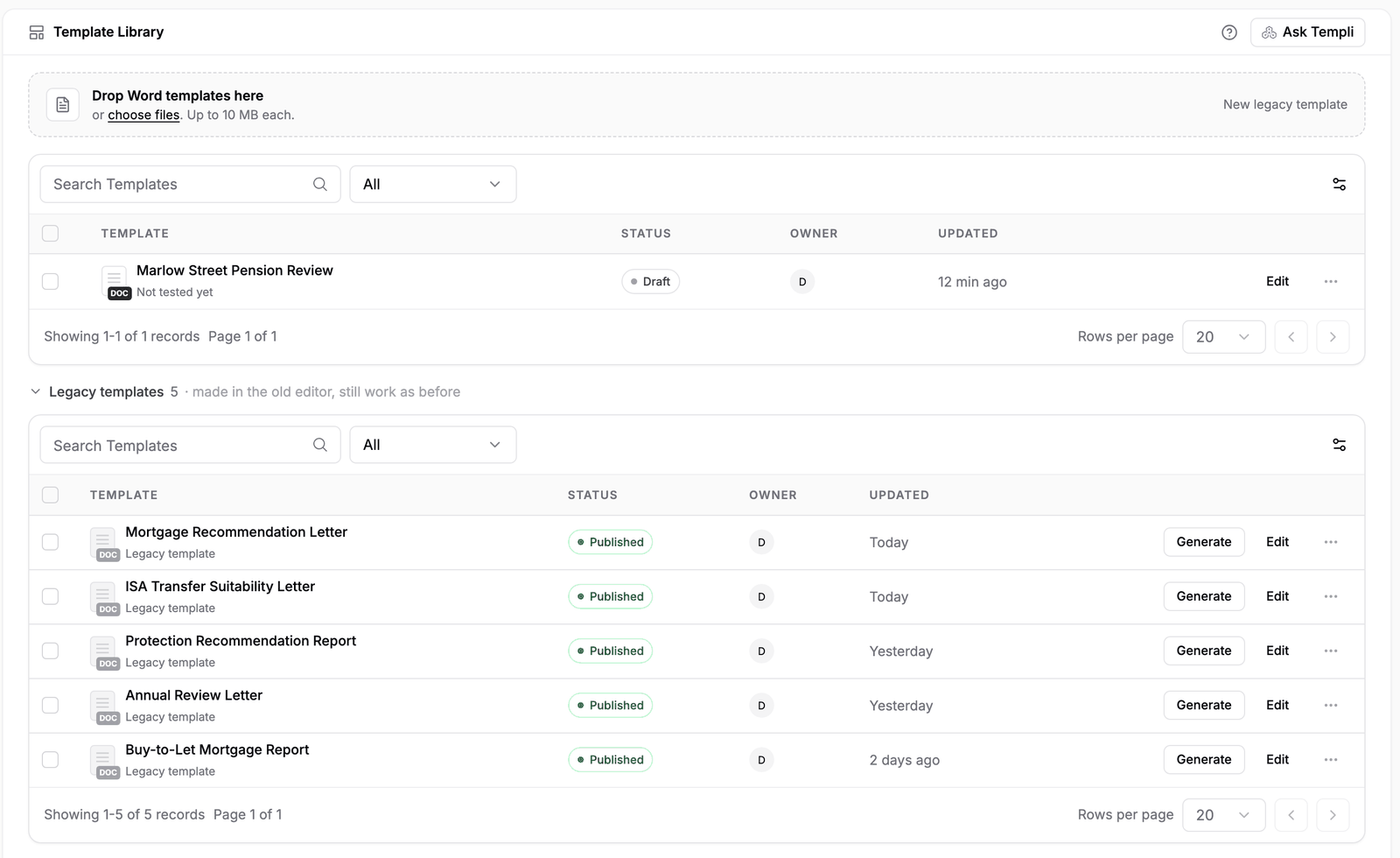
The Templates page shows where each import has got to under the template's name:
Reading the document, Marking up the parts that change and Checking the markup while it works.
Templi needs an answer when it has a question about your template. Click the template's status to open its chat and reply.
Not tested yet once the import has finished. The template is a draft, ready for you to check.
Every template gets its own chat with Templi. Open it from the template with Ask Templi to steer the tagging, for example "Don't tag the adviser's name, it's always Alex Morgan."
Next steps
Check the tags in Edit a Word template.
Try the template on a past case with Tuning.
Publish it, then Generate a report.
Troubleshooting
The template says Import failed or Could not read the file
Templi tagged too much or too little
Open the template and ask Templi to change it, for example "Only tag the yellow highlighted text", or ask it to re-tag the whole template with a clearer description of your mark-up. You can also tag parts yourself in Tag mode.
Was this helpful?
Was this helpful?