

Plans
A plan is a pension, investment, protection policy or mortgage your client holds. Each plan keeps its funds, valuations, contributions, transactions and charges together, so you can see what a client has, what it is worth and what is being paid in without opening the provider's portal.
Find your plans
Click Plans in the sidebar to see every plan across your firm. The four figures at the top show what you have under advice, how many plans there are, how many need a valuation, and how much is being paid in a year.
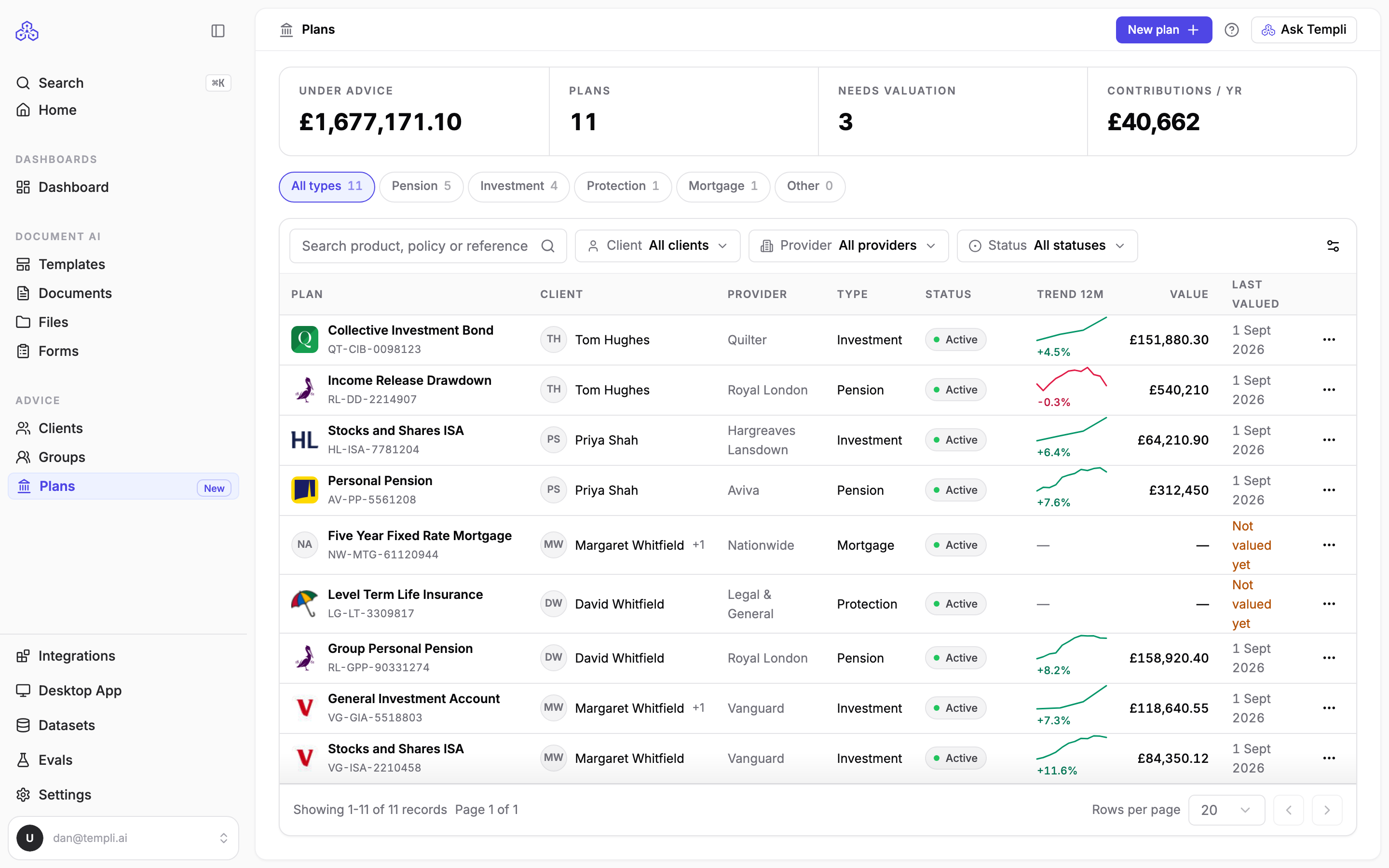
Under advice adds up the latest value of every plan held in pounds.
Needs valuation counts plans with no valuation in the last six months. Their Last valued date shows in amber, and plans never valued show Not valued yet.
Contributions / yr adds up the regular contributions still being paid, turned into a yearly figure.
Use the type buttons (Pension, Investment, Protection, Mortgage, Other) and the Client, Provider and Status filters to narrow the list, or search by product, policy number or reference. To see one client's plans, open the client and go to their Plans tab. The same totals are available as dashboard widgets.
Open a plan
Click a plan to open its record. The left side shows the latest value and how it has moved over 12 months, then the key facts: status, type and provider, policy number, start date, who owns the plan and what is being paid in.
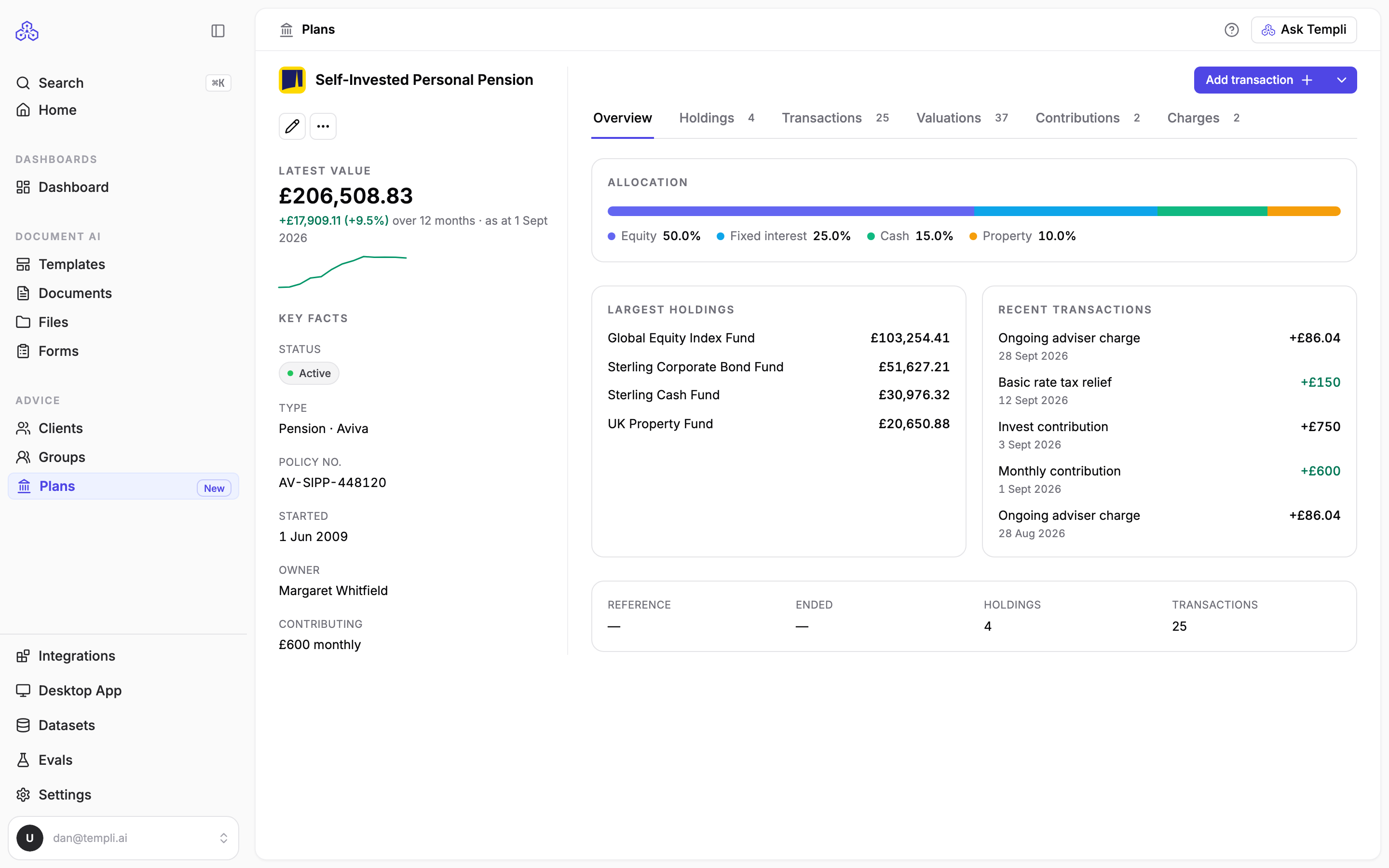
The tabs across the top hold the detail:
Overview: how the plan is split between equities, bonds, property and cash, the largest holdings and the latest transactions.
Holdings: the funds the plan is invested in.
Transactions: money moving in and out, such as contributions, purchases, withdrawals and fees.
Valuations: what the plan was worth on each date.
Contributions: what is paid in, how often and by whom.
Charges: fees and commission on the plan. See View and manage client charges.
The purple button above the tabs adds a row to the tab you are on, such as Add valuation on the Valuations tab. Open its arrow to add anything else.
How plans get into Templi
Most firms never type a plan in. When you import your clients, Templi brings their plans across from your back-office system:
System | What comes across |
|---|---|
Intelliflo Office | Plans, holdings, valuations and contributions |
Iress Xplan | Pensions, assets and liabilities as plans, with holdings, the latest valuation and regular contributions |
Plannr | Plans, holdings and the latest valuation |
Importing again updates the plans Templi already has and adds new ones. Anything you recorded yourself is kept. No back-office system sends transactions, so those are only in Templi if you record them.
Ask Templi to record a plan
You don't have to fill in the form. Ask Templi in chat, for example:
Add Margaret Whitfield's Aviva SIPP, policy AV-SIPP-448120, started June 2009.
Record a valuation of £206,508 on her SIPP as at 1 September.
She now pays £600 a month into the SIPP with relief at source.
What is David's workplace pension worth, and who pays into it?
Templi shows what it recorded, and you can correct it in the same conversation. When the plan is right, you can ask Templi to send it to your CRM.
Add a plan yourself
On the Plans page, click New plan. From a client's Plans tab, click Add plan.
Choose the Clients who hold the plan. Add both clients for a joint plan.
Choose the Type and Status.
Enter the Provider, Product name and Policy number. The product name becomes the plan's title.
Enter Started on, and Ended on only if the plan has finished.
Click Add plan, then add its holdings, valuations and contributions from the tabs.
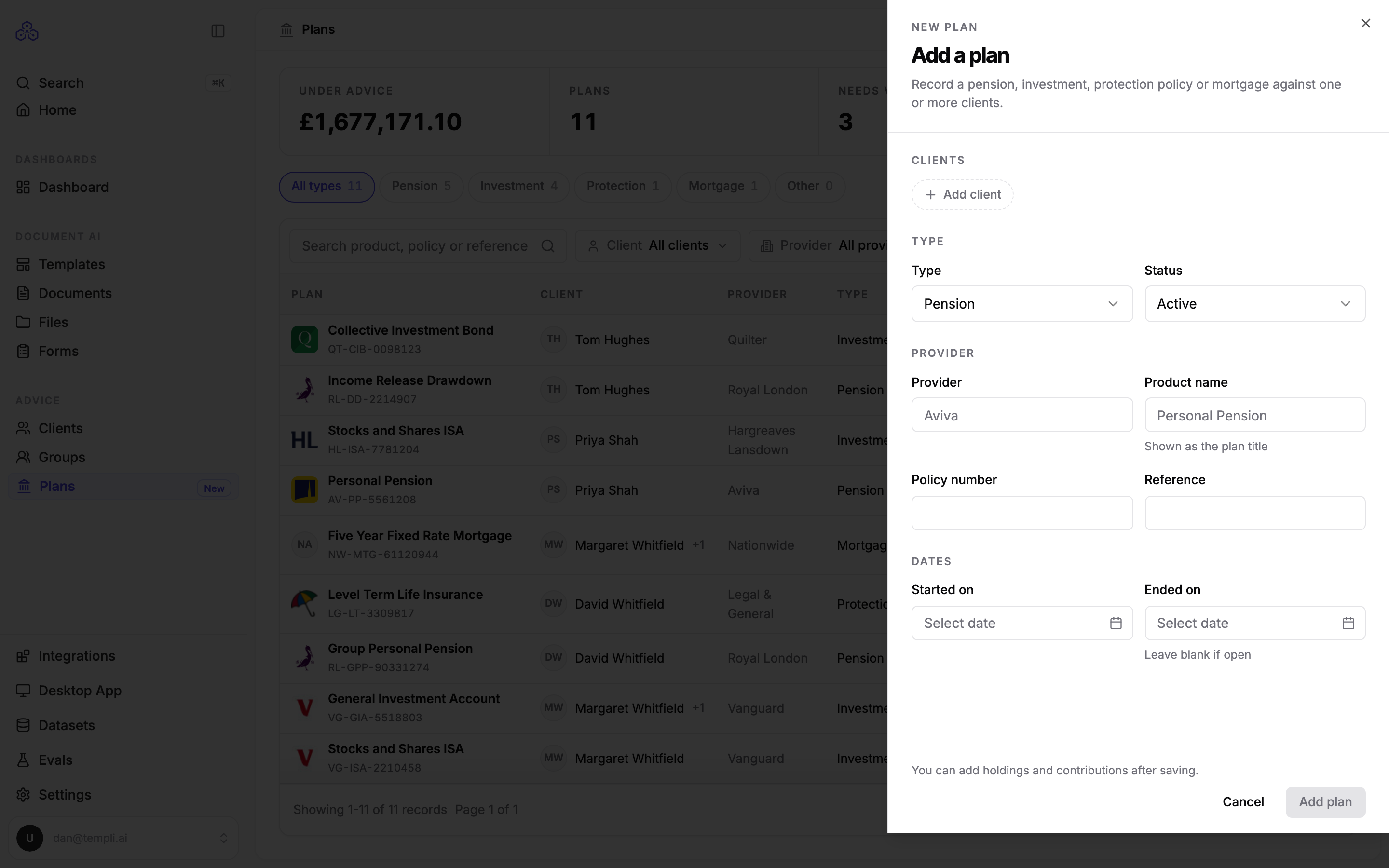
Plan types cover everything an adviser records: ISAs, bonds and general investment accounts are Investment; SIPPs, annuities and drawdown are Pension. Statuses are Active, Pending, Lapsed, Cancelled, Matured, Transferred, Closed and Unknown.
Edit or archive a plan
Click the pencil under the plan's name to change its details or owners, then click Save changes. To remove a plan you no longer advise on, open the ... menu and choose Archive plan. Its holdings, valuations, contributions, transactions and charges are archived with it.
When a client transfers a pension, keep the old plan and set its status to Transferred rather than archiving it. Its history stays on file for the transfer advice.